 Raj
Raj 
It’s 4 PM. The weather has ruled out the park, you’ve got maybe forty minutes before dinner prep, and your three-year-old has said “I’m bored” in that specific tone that means the tablet is about to come out. Again.
Most of us have been there. And the guilt that follows isn’t really about the screen itself – it’s the nagging sense that there was probably something better you could have done, if only you’d had an idea ready.
So here are fifteen. Nothing here needs a trip to the store or an hour of setup. Most use things already sitting in your kitchen.
First, a quick reality check
You don’t need to fill every hour. Boredom isn’t a parenting failure. It’s actually where a lot of independent play gets invented. Some of the best stretches with a preschooler happen when you hand them a cardboard box and then genuinely walk away.
What you do need is a handful of ideas you can reach for when the whining starts and your brain has gone completely blank. That’s what this list is for. Not a curriculum. A cheat sheet.
Activities that need almost nothing
1. Sorting bowls
Give them a bowl of mixed buttons, pasta shapes, or dried beans and three empty bowls. Ask them to sort by colour, then by size, then by shape. Sounds too simple to work. But it isn’t for the preschoolers. Sorting is one of the earliest maths skills, and most three-year-olds will stay with it far longer than you’d expect.
I found this out with my own son one afternoon. He’d been circling me for twenty minutes, bored, and I had nothing left. So I handed him an old wooden abacus toy that had been sitting in the corner untouched for months, and asked him to count the red beads. Then the blue ones. Then the yellow.
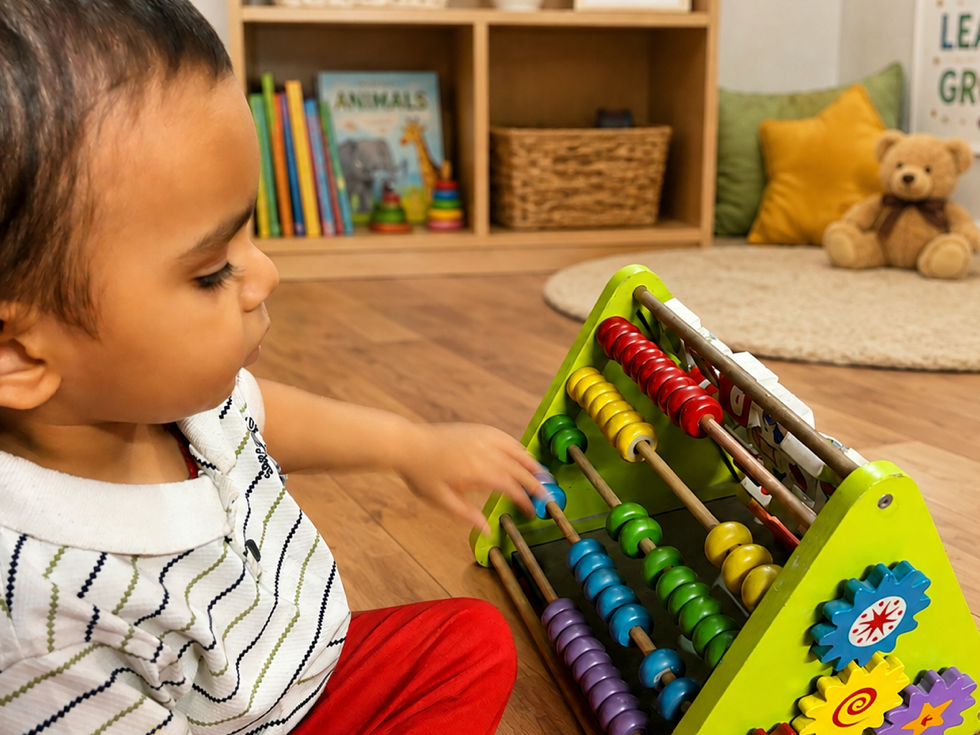
He sat there for close to forty minutes. Same toy he’d walked past a hundred times – the only thing that changed was that I gave him something to do with it. That’s most of the trick, honestly. The toy is rarely the problem.
2. Tape roads
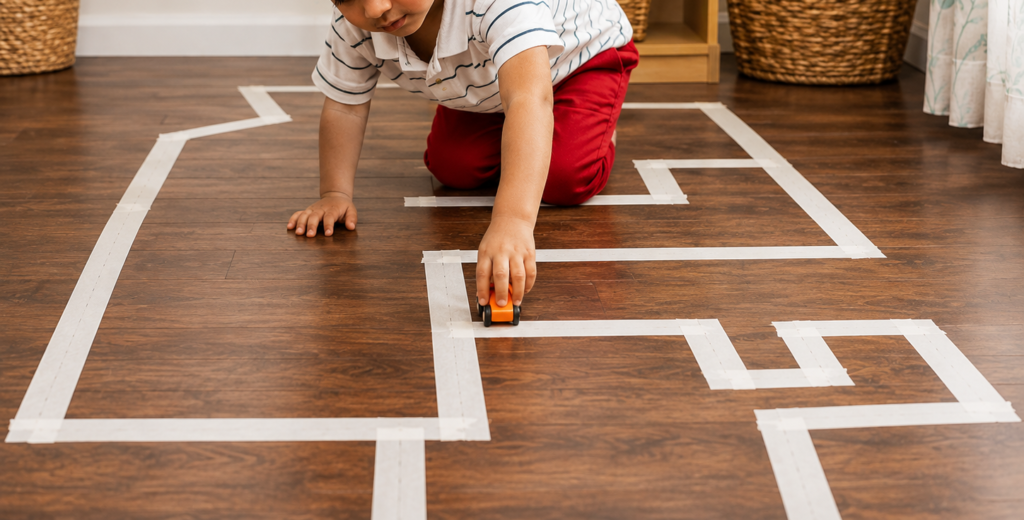
Masking tape on the floor, turned into roads, parking spaces, or a hopscotch grid. The best thing about tape is that it is not messy and peels off cleanly. It’s also very cheap and lasts for days.
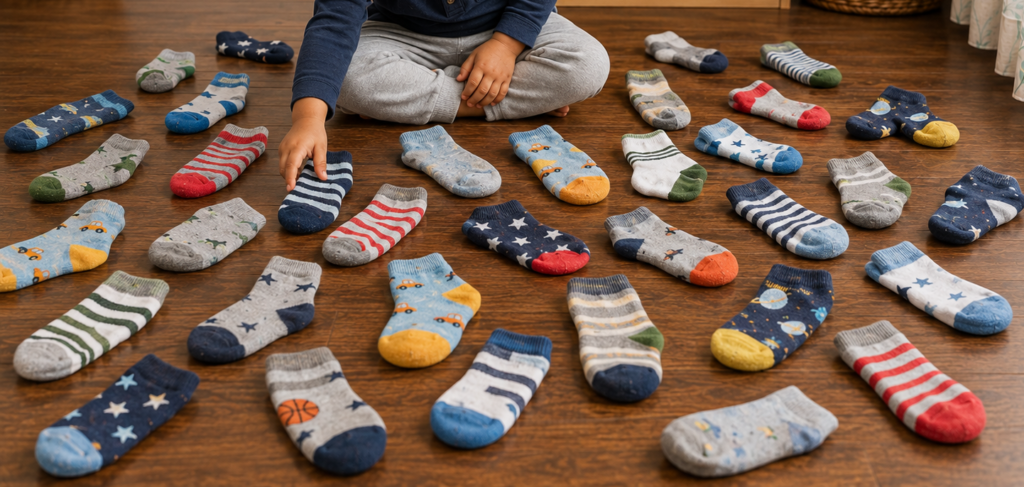
3. The sock-matching game
Dump clean laundry on the floor and ask them to find the pairs. Yes, this is chores disguised as play. But it’s worth the efforts to get them engaged away from those screens.
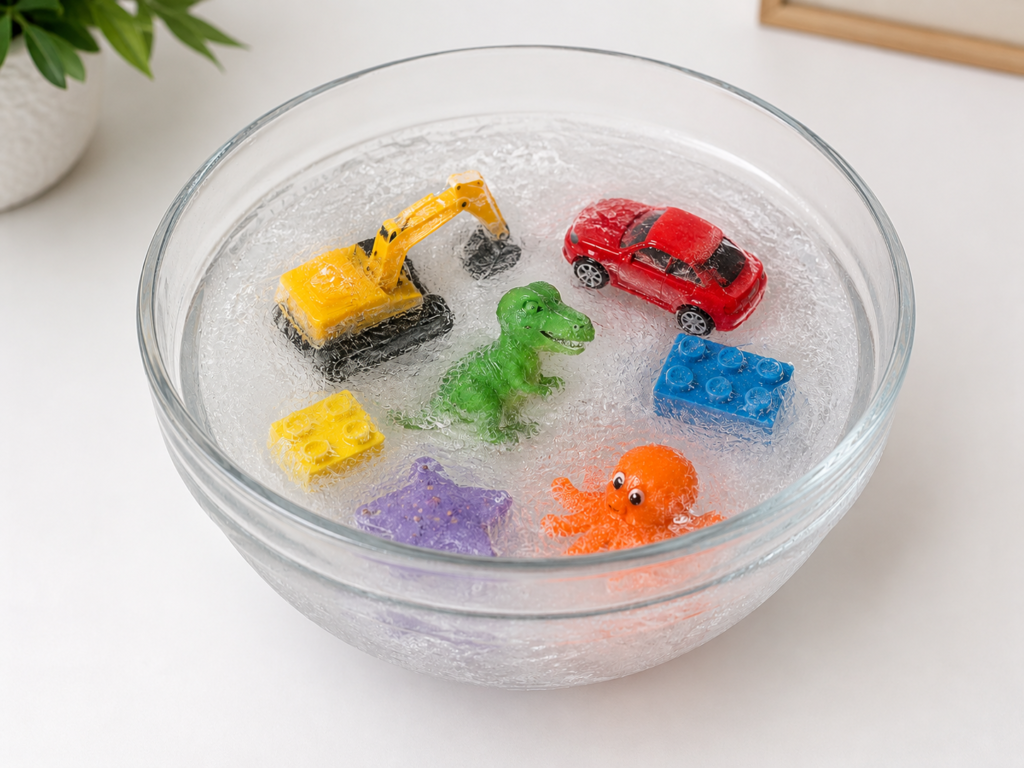
4. Ice excavation
Freeze a few small toys in a bowl of water overnight. Next afternoon, hand it over with a spoon and some warm water and let them work the toys free. Buys you a genuinely surprising amount of time 🙂
5. Kitchen band
Gather a few steel bowls, wooden spoons, and a rice-filled bottle to create a fun homemade band. Your preschooler will love experimenting with sounds, copying rhythms, and singing along.
Activities that build early learning skills
This is where screen-free time starts pulling double duty. The kids have fun and something’s actually being learned underneath it.
6. Flashcard ‘hide-and-seek’
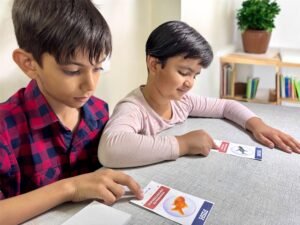
Hide flashcards around the room and send them hunting. When they find one, they name it before it counts. It turns passive card review into a whole-body game, which is exactly how preschoolers learn best – moving, and exploring not sitting.
If you’re building a card set for this, our Rainforest Animals Flashcard Deck and Terrestrial Animals Flashcard Deck work well for this age – big, clear illustrations that a three-year-old can identify from across the room.
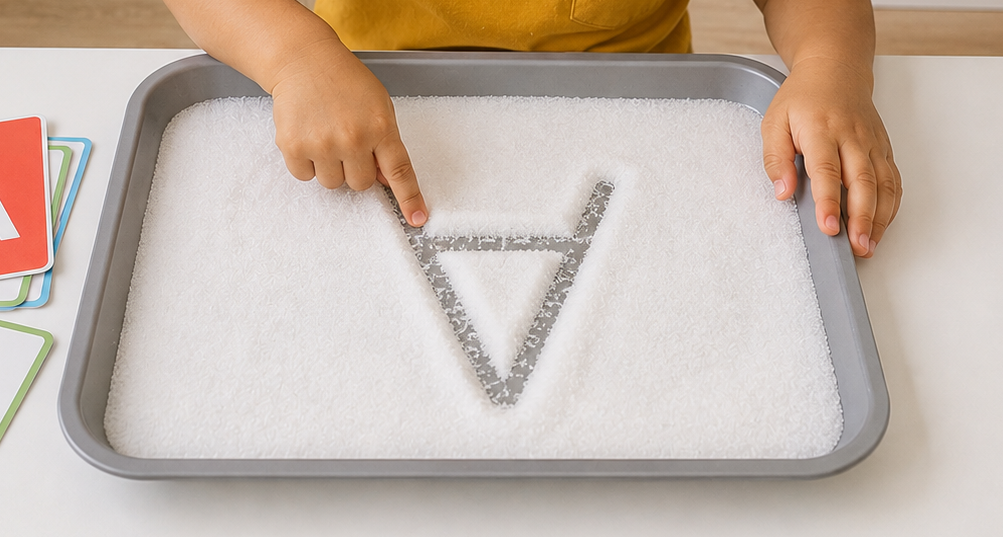
7. Name-writing in a salt tray
Pour some salt or fine rava into a baking tray. Let them trace letters using their fingers. Believe me! The texture feedback makes it stick better than pencil-and-paper does at this age, and there’s no “wrong” to erase.
8. Colour hunts
Pick a colour and challenge your preschooler to find five matching objects around the house. Then choose another colour and start the hunt again! It’s a fun way to build colour recognition, observation skills, and vocabulary while getting little ones moving.
This one scales beautifully – a two-year-old plays it, and so does a five-year-old.
9. Counting stairs
Every time you go up or down, count out loud together. It’s not an activity so much as a habit, but repetition is the whole point with number recognition.
10. Story cubes
Cut squares, draw a simple picture on each side, and roll them to build a story together. Whoever rolls has to add the next sentence. Good for vocabulary, better for laughing.
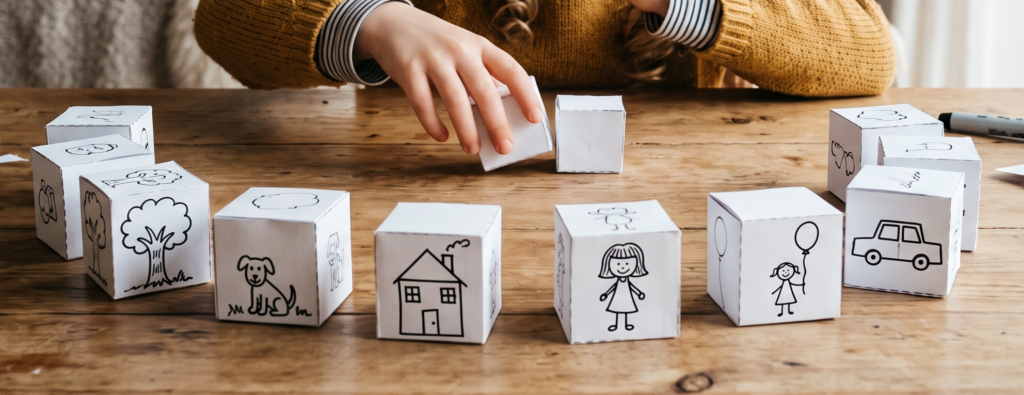
This is how a simple story might unfold:
Once upon a time there was a tree ➤ A dog came near the tree ➤ The dog saw a small house ➤ A girl came out of the house ➤ She had a red balloon ➤ They all went for a ride in the car
Activities for when you need twenty quiet minutes
Let’s be honest. Sometimes the goal isn’t enrichment. It’s a phone call, or dinner, or five minutes of not being touched. In such a scenario, the following activities are worth exploring with your toddlers –
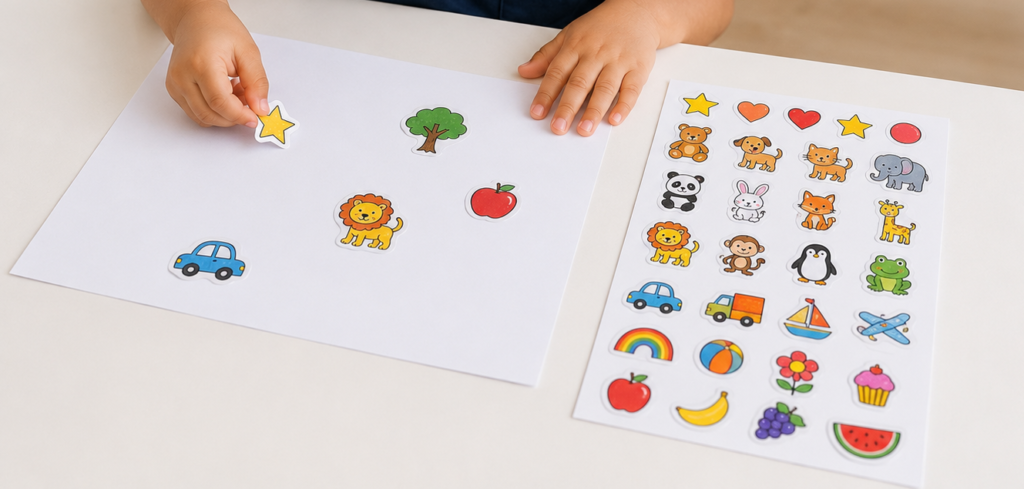
11. Sticker mosaic
Give your preschooler a blank A4 sheet and a page full of colorful stickers. Their mission? Create anything they can imagine – a jungle, a farm, an underwater adventure, or even a magical world. As they peel, place, and arrange each sticker, they’ll naturally build creativity, storytelling skills, and fine motor control. It’s a wonderfully simple activity that keeps little hands busy and minds fully engaged.
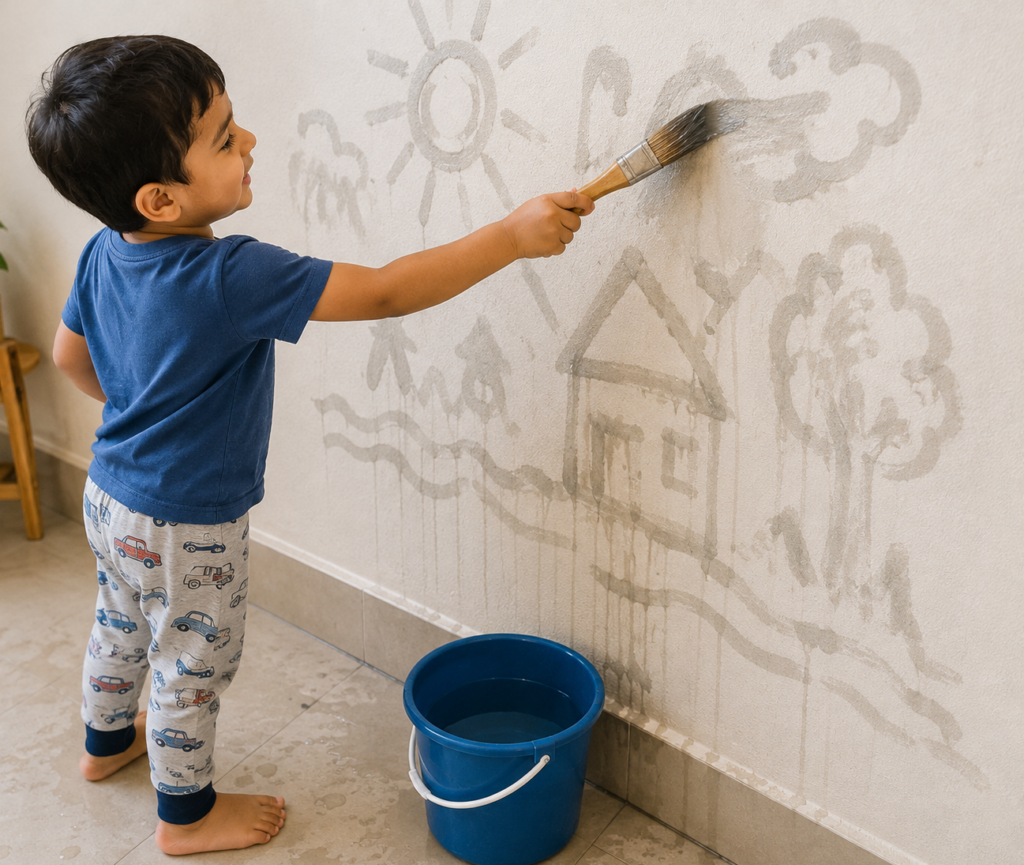
12. Water painting outdoors
Sometimes the simplest activities are the most magical. Fill a bucket with water, hand your preschooler an old paintbrush, and let them “paint” a wall, balcony floor, driveway, or doorstep. They can draw houses, flowers, animals, or simply make giant brushstrokes. As the water evaporates, their artwork disappears, thus giving them a fresh canvas to paint again and again. Best of all, there’s no paint, no stains, and absolutely no cleanup.
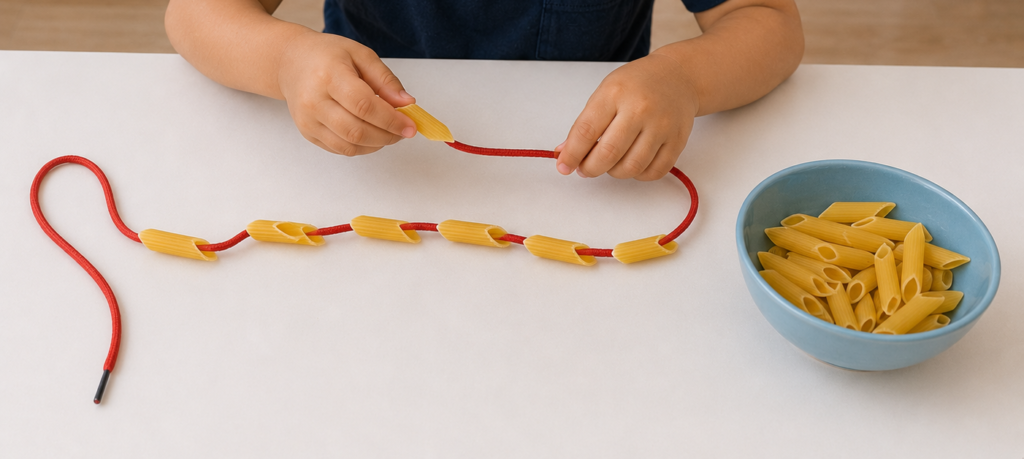
13. Threading pasta
Grab a handful of penne pasta and a shoelace, and let the threading begin! Your preschooler will love carefully sliding each piece of pasta onto the lace to create a long “pasta necklace.” This simple activity is a fantastic way to strengthen fine motor skills, hand-eye coordination, and concentration. It also encourages patience as little hands slow down and focus on one piece at a time.
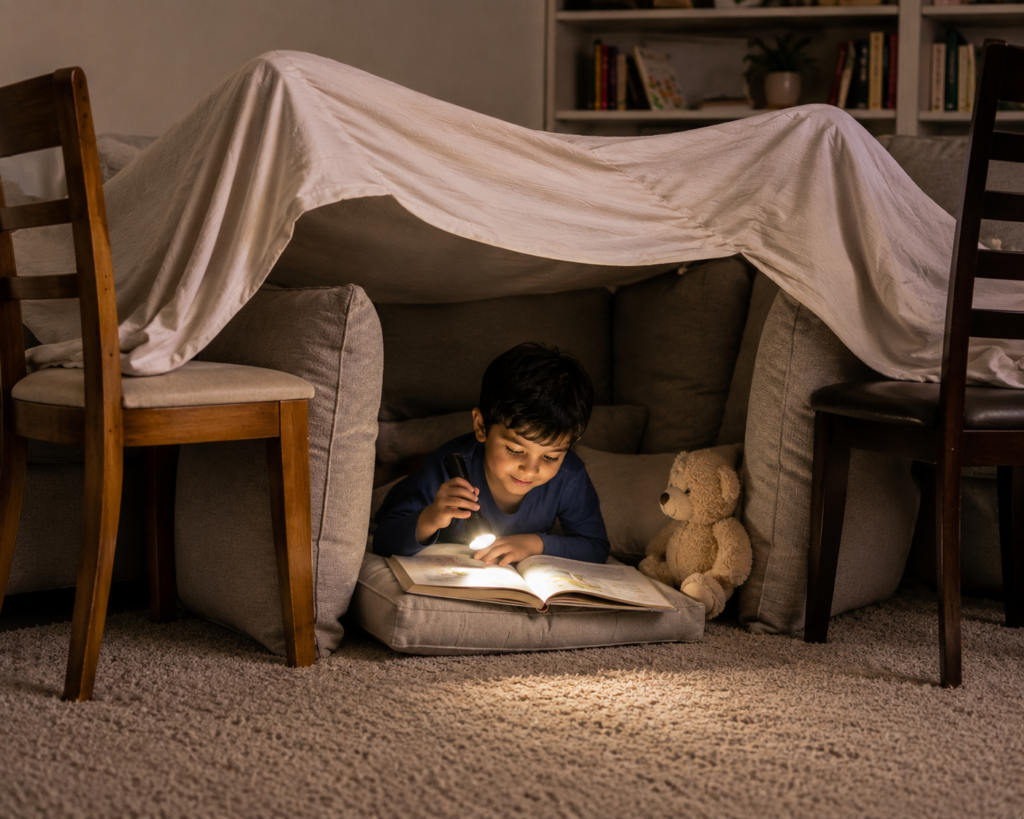
14. Cushion fort
Gather a few sofa cushions, drape a bedsheet over a couple of chairs, and build a cozy fort together. Add a torch and a favorite book, and watch it transform into a magical world where your preschooler can read, imagine, and play for hours.
Sometimes the best adventures happen right in the living room 🙂
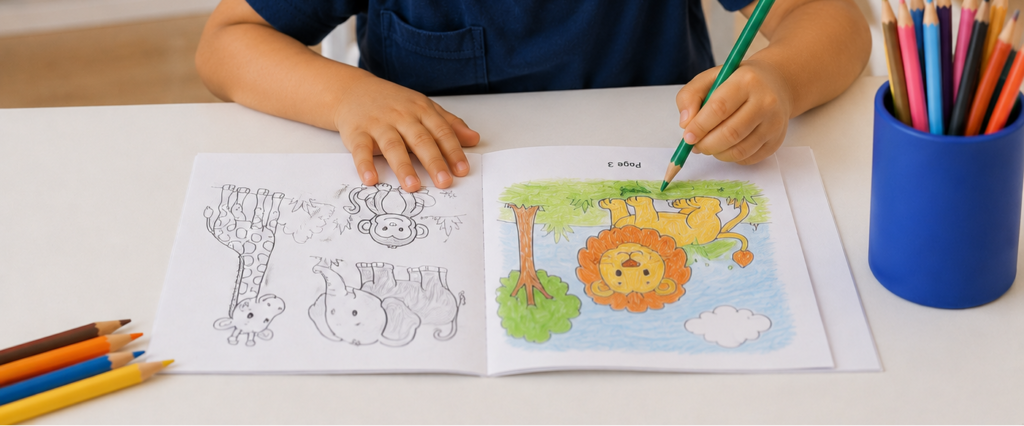
15. Colouring pages
Colouring pages never go out of style! Give your preschooler a set of crayons or coloured pencils and a fun colouring sheet featuring their favourite animals, vehicles, or characters. As they carefully colour inside the lines, they’re building fine motor skills, creativity, hand-eye coordination, and focus – all while enjoying a calm, screen-free activity.
How to actually use this list
The mistake most of us make is trying to remember these in the moment. You won’t. At 4 PM with a whining child, nobody recalls the ice excavation idea.
So do this instead:
- Pick five from this list that suit your home and your child’s age.
- Write them on a sticky note and put it inside a kitchen cupboard door.
- Pre-stage what you can: Freeze the toys tonight. Cut the story cubes on Sunday. Half the reason ideas don’t get used is the setup friction.
- Rotate every couple of weeks: Swap in five different ones so nothing gets stale.
- Let two of them be “solo” activities, the ones they can do without you. Those are the ones that save your afternoon.
Sound simple? It is. The list isn’t the hard part. The hard part is having it somewhere you’ll actually see it.
A note on screens, since we’re here
Let’s be realistic. Screens aren’t the enemy. In today’s world, they’re a part of everyday life. What matters most isn’t just how much screen time children get, but how they use it. Watching age-appropriate content together, choosing high-quality educational programs, and making sure screens don’t replace sleep, active play, or family time are all far more important than counting every minute.
The goal isn’t to eliminate screens completely. It’s simply to have a few enjoyable, screen-free options ready for those moments when your preschooler is bored and you’re running out of ideas. Even replacing 20–30 minutes of screen time with hands-on play can spark creativity, build important skills, and create wonderful memories together.
After all, the best childhood moments often begin with the simplest activities.
As a parent, I don’t believe screens are something to fear or eliminate completely. There are days when a good educational video gives me the few minutes I need to finish a chore, answer an important call, or simply catch my breath!
What I try to avoid is letting screens become the default answer to boredom. I’ve found that when I offer a simple, hands-on activity instead, my child is usually just as happy, if not happier. For me, it’s not about raising a child with zero screen time – it’s about creating a healthy balance where imagination, movement, books, and real-world play still take center stage.
Which of these does your preschooler actually go for? I’d love to know which ones fell flat too – some of these work brilliantly for one kid and get a blank stare from the next.